
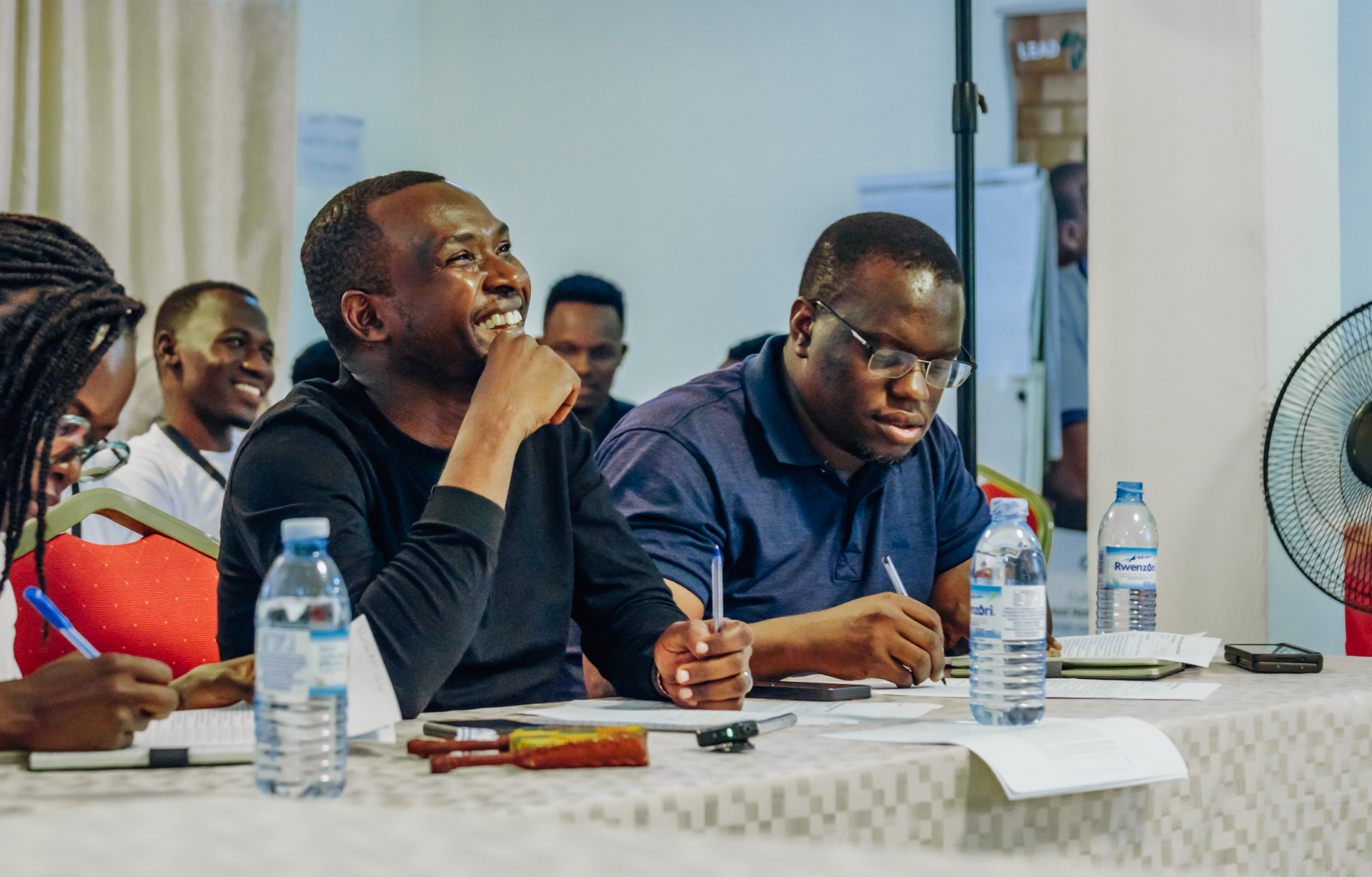
Last week, I led a team of facilitators at the Lead4africa Innovation Hackathon 2026, a three intensive days guiding the Lead4africa alumni and students through a human-centered approach to solving real agricultural challenges in Uganda and South Sudan.
The challenge presented to us was clear: introduce innovative approaches to starting enterprises. Not the usual "I have access to capital, let me start a business" route, but a fundamentally different path-one that prioritizes building ventures that are actually innovative, solve urgent user needs, and are grounded in the realities of the people they serve.
This wasn't your typical "build an app in 48 hours" hackathon. Ours was to design a process that ensured a deep problem understanding before any solutions are considered.
Our approach
Day 1: Immersion Before Ideation, We started with agricultural context sessions led by the amazing founder Richard Obuku, followed by a problem discovery workshop where we worked with participants to ask better questions and recognize their own biases. Then came the critical part: field visits to Unyama NTC Farm and MArts Birds just outside Gulu, where teams conducted ethnographic research-interviews, observations, and data collection in real agricultural settings. We closed with a moderated panel discussion with farmers and entrepreneurs, ensuring teams heard directly from the people they'd be designing for. Only after all this did we form teams around users, not ideas, and synthesize findings into evidence-based problem statements.
Richard Obuku (Co-Founder & CEO, River Poultry) • Visit to Unyama NTC Farm on the outskirts of Gulu City
Day 2: Build, Test, Learn, Repeat, Teams moved into guided ideation and low-fidelity prototyping using sketches, storyboards and mock-ups. Nothing polished, everything testable. By midday, they were back in front of farmers and domain experts (our panelists from Day 1) testing assumptions and gathering feedback. The afternoon was spent iterating based on what they learned, not what they hoped would work. We introduced the pitching framework not as performance coaching, but as a tool for clear, honest storytelling about the problem and solution.
Day 3: From Concept to Viability, The final day addressed the question "Can this actually work in the real world?" We covered business logic fundamentals-costs, pricing models, sustainability. Teams spent hours refining their solutions and practicing pitches with continuous coaching. The three winning teams didn't just present compelling slides; they demonstrated genuine understanding of their users and a realistic path forward.
Teams working on their final problem statements
What made the difference
The transformation I witnessed wasn't about technology or innovation theater. It was about building businesses the right way from the start-starting with people and problems, not capital and assumptions. Teams arrived energized by their ideas. They left energized by their users-the farmers whose realities they now understood. That's where truly innovative, sustainable enterprises begin.
This outcome was possible because of intentional design:
- Structured discovery that prevents teams from falling in love with solutions before understanding problems
- Direct user access at multiple touch points throughout the process
- Rapid feedback loops that make iteration a practice, not a buzzword
- Reality-grounded validation that ensures solutions fit into actual user contexts, not idealized scenarios
- Experienced facilitation that knows when to guide, when to challenge, and when to step back
My co-facilitators Derrick Rubangakene Otim, Robinson Nakwasa, and Kobusingye Rachael brought deep expertise and kept teams focused on what mattered. And the farmers who opened their operations and shared honest feedback made the entire experience authentic and grounded.
The teams are now incubation-ready. They're moving forward with validated problems, tested solution concepts, and the mindset to continue iterating with their users. These aren't just hackathon projects-they're the foundations of businesses that address urgent needs and are built on evidence, not assumptions. That's the kind of entrepreneurship that creates lasting impact.
Looking ahead
If your organization is looking to create or improve innovation programs that produce real, sustainable outcomes, let's talk. I specialize in designing experiences that move early-stage innovations from concept to market-ready ventures.
Program Design & Facilitation, I design and facilitate innovation programs that produce ventures grounded in real user needs. From hackathons and design sprints to full accelerator and incubation curricula, I create programs that balance speed with rigor, ensuring teams move fast without cutting corners on validation.
Early-Stage Innovation Support, I guide startup teams through the critical early phases like problem discovery, solution validation, user research, and market testing. Whether you need someone to design pilot programs, develop customer development processes, or build MVP testing frameworks, I help teams validate their assumptions before they scale them.
Organizational Capacity Building, I train internal teams to run innovation programs independently, develop facilitation skills for program managers and mentors, and create customized toolkits and frameworks that fit your organizational context and target sectors.
Who I work with: Incubators, accelerators, innovation hubs, development organizations, foundations, and corporate innovation teams across sectors with particular interest in social innovation and economic development across East Africa and beyond.
Whether you're launching a new program, refining an existing one, or need expert facilitation for a specific cohort or event, I bring structured methodologies and practical tools. Let's connect.